Watermelon Wine (August 29, 2014)
Watermelon
Water to fill jug
1kg sugar
champagne yeast
Cut
watermelon off rind. Remove seeds. Chop into small pieces. Drop into
carboy. (The more watermelon, the better the wine should be). Add sugar water. Fit air lock.
Oct 27 - Racked. Taste tested. Yuck.
Jan 4, 2014 - Racked. Taste Tested. Slightly sour. Little flavour. 11% alcohol content.
March 20, 2015 - Racked. Taste Tested. Slightly sour. Little flavour. 11% alcohol content. Bottled.
Saturday, 3 January 2015

Pin Cherry Wine (4L)
Pin Cherry Wine (August 28, 2014)
2 Cups pin cherry juice (from 1L of pincherries)
1kg sugar
Water to fill jug
champagne yeast
Boil pin cherries in just enough water to make them bob. Mash with potato masher. Hang in juice bag over night to collect juice.
Pour juice into carboy. Add sugar and water and mix. Let rest 24 hours. Add yeast.
Sept 15, 2014 - Racked. Taste tested. Sour. Strong Cherry flavour. Topped with water. Reset air lock.
Jan 2, 2015 - Racked. Taste tested. Nice cherry flavour. Slightly sour. 4.5% alcohol. Topped with water. Reset air lock.
Based on Jack Keller's Choke Cherry Wine
2 Cups pin cherry juice (from 1L of pincherries)
1kg sugar
Water to fill jug
champagne yeast
Boil pin cherries in just enough water to make them bob. Mash with potato masher. Hang in juice bag over night to collect juice.
Pour juice into carboy. Add sugar and water and mix. Let rest 24 hours. Add yeast.
Sept 15, 2014 - Racked. Taste tested. Sour. Strong Cherry flavour. Topped with water. Reset air lock.
Jan 2, 2015 - Racked. Taste tested. Nice cherry flavour. Slightly sour. 4.5% alcohol. Topped with water. Reset air lock.
Based on Jack Keller's Choke Cherry Wine
WILD CHOKECHERRY WINE (1)
- 2-1/2 lbs fresh wild chokecherries
- 2-1/2 lbs finely granulated sugar
- 1 tsp acid blend
- 1/2 tsp pectic enzyme
- 1/4 tsp grape tannin
- 7 pints water
- 1 tsp yeast nutrient
- 1 crushed Campden tablet
- Champagne or Sauterne wine yeast
Crab Apple Wine (4L)
Crab Apple Wine (4L) - Sept 7, 2014
Pick, wash, destem crab apples. Boil in a stock pot with just enough water to cover apples. Boil and mash. Hang to drip. Collect juice.
Pour juice into carboy. Add 1kg sugar. Mix well. Let rest over night.
Mix again. Add yeast. Fit air lock.
Jan 2, 2015 - Racked. Taste tested. Nice apple flavour. Slightly sour. 10% alcohol. Topped with water. Reset air lock.
Pick, wash, destem crab apples. Boil in a stock pot with just enough water to cover apples. Boil and mash. Hang to drip. Collect juice.
Pour juice into carboy. Add 1kg sugar. Mix well. Let rest over night.
Mix again. Add yeast. Fit air lock.
Jan 2, 2015 - Racked. Taste tested. Nice apple flavour. Slightly sour. 10% alcohol. Topped with water. Reset air lock.
Lime Wine (4L)
Lime Wine (4L) - Sept 7, 2014
Jan 2, 2015 - Racked. Taste tested. Nice lime flavour. Slightly bitter. Pulpy. 7% alcohol. Topped with water. Reset air lock.
Grate the zest from the lemons and limes and add them and the chopped raisins to a large pan. Add the sugar and pour the boiling water over and wait for the sugar to dissolve. Now add the lemon and lime juice. When the mixture has cooled to room temperature add the pectic enzyme, yeast and nutrient. Cover and store for about a week, stirring occasionally. After a week strain into a demijohn and fit the fermentation trap. When the wine begins to clear it is ready to be racked.
Wash
10-15 limes. Boil limes in a pot of water to loosen pulp (5-10
minutes). Reserve boiling water. Let cool slightly before juicing.
Juice limes through strainer to catch seeds. Pour pulp back in once
seeds removed. Add boiling water. Add 1 kg sugar. Mix well. Top up
with water. Let cool.
Add champagne yeast. Fit airlock.Jan 2, 2015 - Racked. Taste tested. Nice lime flavour. Slightly bitter. Pulpy. 7% alcohol. Topped with water. Reset air lock.
- 8-12 lemons or limes (as a combination or on their own)
- 2 kg sugar
- 1.5 kg raisins
- pectic enzyme
- 4 litres of water
- yeast and nutrient
Grate the zest from the lemons and limes and add them and the chopped raisins to a large pan. Add the sugar and pour the boiling water over and wait for the sugar to dissolve. Now add the lemon and lime juice. When the mixture has cooled to room temperature add the pectic enzyme, yeast and nutrient. Cover and store for about a week, stirring occasionally. After a week strain into a demijohn and fit the fermentation trap. When the wine begins to clear it is ready to be racked.
Blueberry Wine (68L)
Blueberry Wine (68L) - Sept 2013
16L blueberries
4kg sugar
Lalvin Sparkling wine yeast
Day 1- Put blueberries into carboy without washing to preserve the natural yeast. Boiled sugar in water. Added to carboy. Topped up with water (68L total).
Day 8- Added yeast starter.
Nov 29- Removed airlock. Stirred wine vigorously. Topped up with water. Refit airlock.
Nov 30- Blueberries floated back up over water level, causing wine to bubble up through airlock.
Jan 4- Stirred, topped up, refit airlock. Still have solid blueberries floating on top.
Apr 5- Stirred, topped up, refit airlock. Still have solid blueberries floating on top.
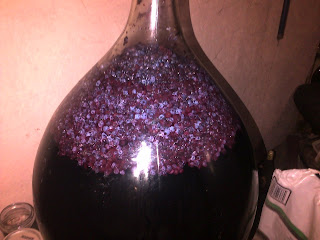
June 2014- Stirred vigorously. Yeast has come out of dormancy. Still have solid blueberries, but air lock is bubbling vigorously again.
Aug 2014 - Stirred vigorously. Thin layer of solid blueberries, air lock still bubbling.
Jan 2, 2015 - Racked into 2 22L carboys. Taste tested. Mild blueberry flavour. Sour. No alcohol reading. Topped with Sugar water- 2kg. Set air locks.
July 7, 2015 - Racked one 22L carboy. Taste tested. Tastes like wine, no blueberry flavour. Set air lock.
Summertime Blueberry Wine
Makes 5 gallons (19 L)
15 lbs. (6.8 kg) blueberries
9 lbs. (4 kg) sugar
2–3 cups grape concentrate
(optional — this will add to the
wine’s fruitiness)
2.5 tsp. acid blend
2.5 tsp. pectic enzyme
3 tsp. yeast nutrient
0.18 oz. (5 g) potassium metabisulfite
(approximately 150 ppm SO2)
2 tsp. potassium sorbate
1 tsp. tannin
Yeast (Lalvin EC1118 or
Lalvin 71B-1122)
1. Crush the blueberries.
2. Add the water-sugar mixture and enough water to make 5 gallons (19 L). Add potassium metabisulfite. Cover and let sit for two days.
3. Add sugar, if necessary, to reach specific gravity of 1.090.
4. Add the tannin, acid blend, pectic enzyme and yeast nutrient. Stir everything to blend.
5. Maintain a constant fermentation temperature range between 70–75 °F (21–24 °C).
6. Add yeast to the must.
7. Stir the floating cap of fruit pulp into the fermenting must twice a day during fermentation.
8. Fermentation will continue for approximately 14 to 21 days. Take notice if the bubbles in the airlock have gotten very slow — that is a good sign that the fermentation is coming to an end. Use your hydrometer to monitor and make sure that the fermentation has stopped.
9. Use a mesh bag to extract the juice from the blueberries in the must. Rack the remaining juice to a carboy, leaving the sediment (lees) behind. If possible, move the wine to a cooler place, like a basement, to clear. Rack the wine at least two more times before even thinking about bottling it. Add another Campden tablet to the wine after each racking. The wine should age at least three months.
16L blueberries
4kg sugar
Lalvin Sparkling wine yeast
Day 1- Put blueberries into carboy without washing to preserve the natural yeast. Boiled sugar in water. Added to carboy. Topped up with water (68L total).
Day 8- Added yeast starter.
Nov 29- Removed airlock. Stirred wine vigorously. Topped up with water. Refit airlock.
Nov 30- Blueberries floated back up over water level, causing wine to bubble up through airlock.
Jan 4- Stirred, topped up, refit airlock. Still have solid blueberries floating on top.
Apr 5- Stirred, topped up, refit airlock. Still have solid blueberries floating on top.
June 2014- Stirred vigorously. Yeast has come out of dormancy. Still have solid blueberries, but air lock is bubbling vigorously again.
Aug 2014 - Stirred vigorously. Thin layer of solid blueberries, air lock still bubbling.
Jan 2, 2015 - Racked into 2 22L carboys. Taste tested. Mild blueberry flavour. Sour. No alcohol reading. Topped with Sugar water- 2kg. Set air locks.
July 7, 2015 - Racked one 22L carboy. Taste tested. Tastes like wine, no blueberry flavour. Set air lock.
 |
| Blueberry and Strawberry Wine |
Summertime Blueberry Wine
Makes 5 gallons (19 L)
15 lbs. (6.8 kg) blueberries
9 lbs. (4 kg) sugar
2–3 cups grape concentrate
(optional — this will add to the
wine’s fruitiness)
2.5 tsp. acid blend
2.5 tsp. pectic enzyme
3 tsp. yeast nutrient
0.18 oz. (5 g) potassium metabisulfite
(approximately 150 ppm SO2)
2 tsp. potassium sorbate
1 tsp. tannin
Yeast (Lalvin EC1118 or
Lalvin 71B-1122)
1. Crush the blueberries.
2. Add the water-sugar mixture and enough water to make 5 gallons (19 L). Add potassium metabisulfite. Cover and let sit for two days.
3. Add sugar, if necessary, to reach specific gravity of 1.090.
4. Add the tannin, acid blend, pectic enzyme and yeast nutrient. Stir everything to blend.
5. Maintain a constant fermentation temperature range between 70–75 °F (21–24 °C).
6. Add yeast to the must.
7. Stir the floating cap of fruit pulp into the fermenting must twice a day during fermentation.
8. Fermentation will continue for approximately 14 to 21 days. Take notice if the bubbles in the airlock have gotten very slow — that is a good sign that the fermentation is coming to an end. Use your hydrometer to monitor and make sure that the fermentation has stopped.
9. Use a mesh bag to extract the juice from the blueberries in the must. Rack the remaining juice to a carboy, leaving the sediment (lees) behind. If possible, move the wine to a cooler place, like a basement, to clear. Rack the wine at least two more times before even thinking about bottling it. Add another Campden tablet to the wine after each racking. The wine should age at least three months.
Rhubarb Mint Wine (22L)
After looking at several recipes online, I decided to try something
of my own. This may or may not work out, so any reader might want to
avoid trying this. Based loosely on this and this.
Rhubarb With Mint Wine
12.50 lb Rhubarb (cubed) (I picked all that I had, but it's probably only about 7 pounds)
Rhubarb With Mint Wine
12.50 lb Rhubarb (cubed) (I picked all that I had, but it's probably only about 7 pounds)
12 Cups Mint tea (fresh mint from the garden, steeped 20 minutes.
5.00 gallons of water
4 kg White granulated sugar
1.25 ts Grape tannin (optional)
5.00 tsp Yeast nutrient
1pk wine yeast
Starting specific gravity should be 1.090-1.095, Acid .60%.
Day 1- July 11
Pick,
wash, cube rhubarb. Put in primary fermenter. Pour dry sugar over
fruit (2kg) to extract juice. Cover. Steep mint leaves 20 minutes,
allow to cool overnight. Pour over fruit next morning. Stir primary.
Cover.
Day 3- July13
I pulverized the rhubarb in the magic bullet, then poured it back into the primary. Stirred vigorously.
Day 9 - July 20
Strained
rhubarb juice through pillow case several hours. Poured into carboy.
Started yeast with water and sugar in measuring cup. Boiled sugar until
dissolved. Let cool. Added to carboy. Added yeast. Topped up with
water to neck of carboy.
Nov 29- Day ...?
Racked
wine. Taste tested. Beautiful. Vinometer at 6% alcohol. Very sweet
with definite rhubarb and mint flavouring. Discarded lees. Topped up
with cold water.
Rack again in 3 months. When
wine is clear and stable, bottle. Wine may be sweetened to taste at time
of bottling with sugar syrup (2 parts sugar to 1 part water). Add 2
stabilizer tablets per gallon (or follow directions on package if using
powder) to prevent renewed fermentation. To preserve colour and flavour
add 1 antioxidant tablet per gallon. Age at least 6 months.
Apr 5- (9 months later)
Racked and bottled. 25 bottles. Vinometer at 6% alcohol. Very sweet with hint of mint.
Dandelion Rhubarb Wine (22L)
Dandelion Rhubarb Wine
Boil water. Put flowers in primary. Pour boiling water over top.
Added sugar. Stir well until sugar dissolved. Cover and let stand overnight.
Stir in remaining ingredients except yeast, recover and wait 10 hours.
June 10- Strain. Transfer to secondary, top up if required. Add yeast. Attach airlock.
Nov. 29-
Racked wine. Discarded lees. Vinometer at 14% alcohol. Taste tested. Sweet and bitter. Like bitter sugar water. Strong alcohol. Topped up with cold water.
Jan 4- Racked and bottled. 28 bottles. Broke vinometer, but guessing it's at least 12%. Sweet wine with sour rhubarb bite.
Allow to age in bottles 6 months to one year.
- 10L dandelion flowers
- 2L Rhubarb Juice
- 6 kg granulated sugar
- 1 tsp pectic enzyme
- 1/4 tsp tannin
- 1 tsp yeast nutrient
- wine yeast
Boil water. Put flowers in primary. Pour boiling water over top.
Added sugar. Stir well until sugar dissolved. Cover and let stand overnight.
Stir in remaining ingredients except yeast, recover and wait 10 hours.
June 10- Strain. Transfer to secondary, top up if required. Add yeast. Attach airlock.
Nov. 29-
Racked wine. Discarded lees. Vinometer at 14% alcohol. Taste tested. Sweet and bitter. Like bitter sugar water. Strong alcohol. Topped up with cold water.
Jan 4- Racked and bottled. 28 bottles. Broke vinometer, but guessing it's at least 12%. Sweet wine with sour rhubarb bite.
Allow to age in bottles 6 months to one year.
Subscribe to:
Posts (Atom)